




InfiX.ai

助力生成式人工智能最后一公里

我们的使命与愿景

InfiX.ai 正在通过低精度训练、模型融合、GUI 智能体和多模态智能,开创协作式生成 AI 的新路径

使命

在 InfiX.ai,我们致力于让 AI 更易获取、更高效、更强大。我们的研究专注于开发创新技术,在保持实际可用性的同时,不断突破 AI 系统所能实现的边界。

愿景

我们不只是在构建又一个模型,而是正在构建能够构建所有模型的系统。

ACCESSIBLE EFFICIENT CAPABLE

研究重点

推理增强型低精度训练

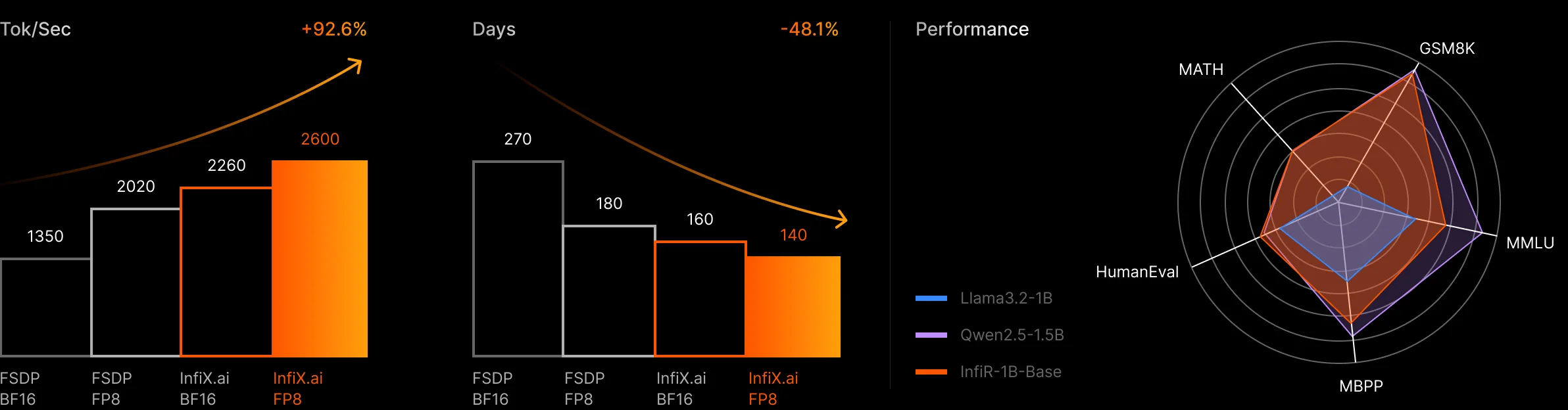
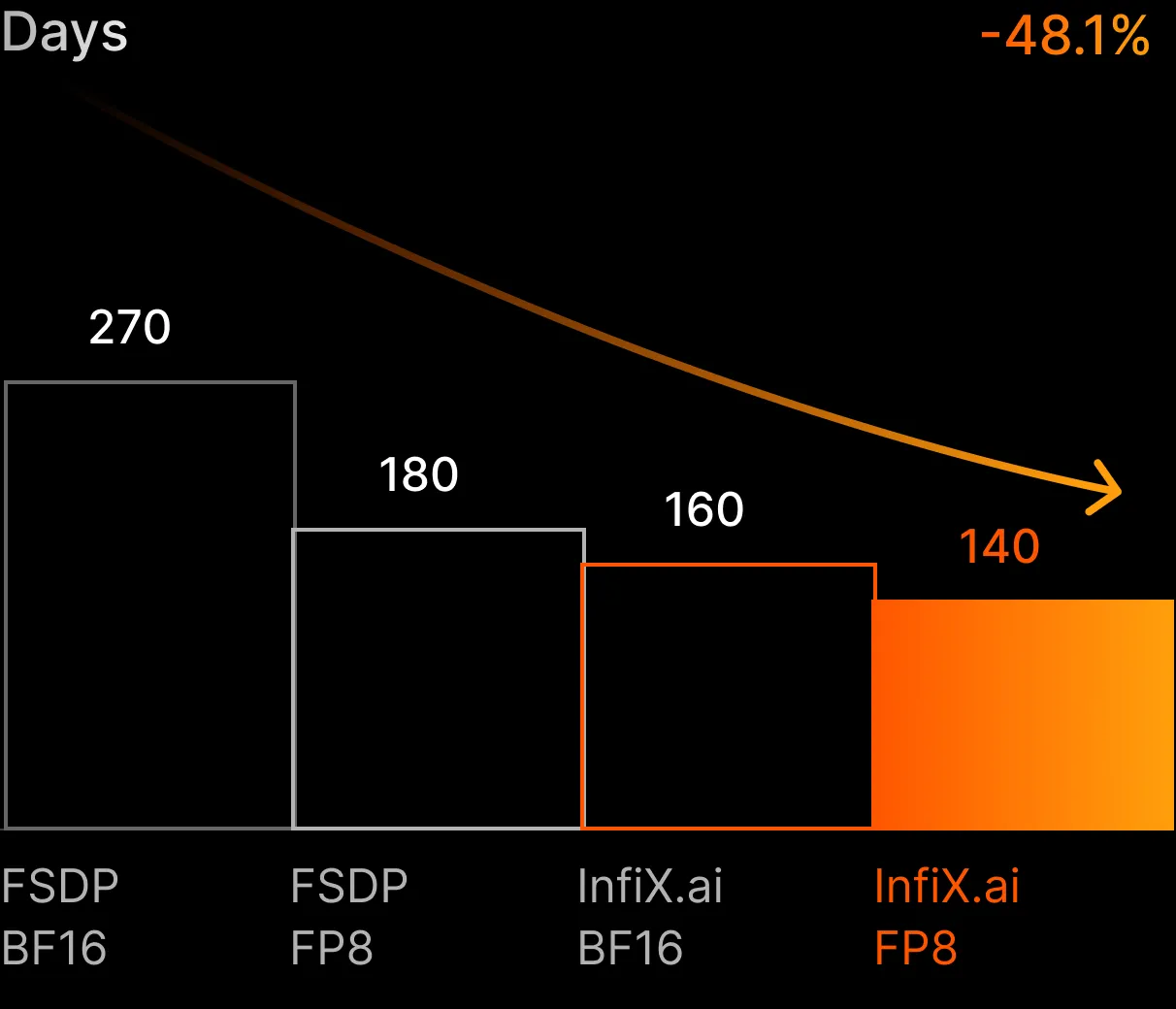
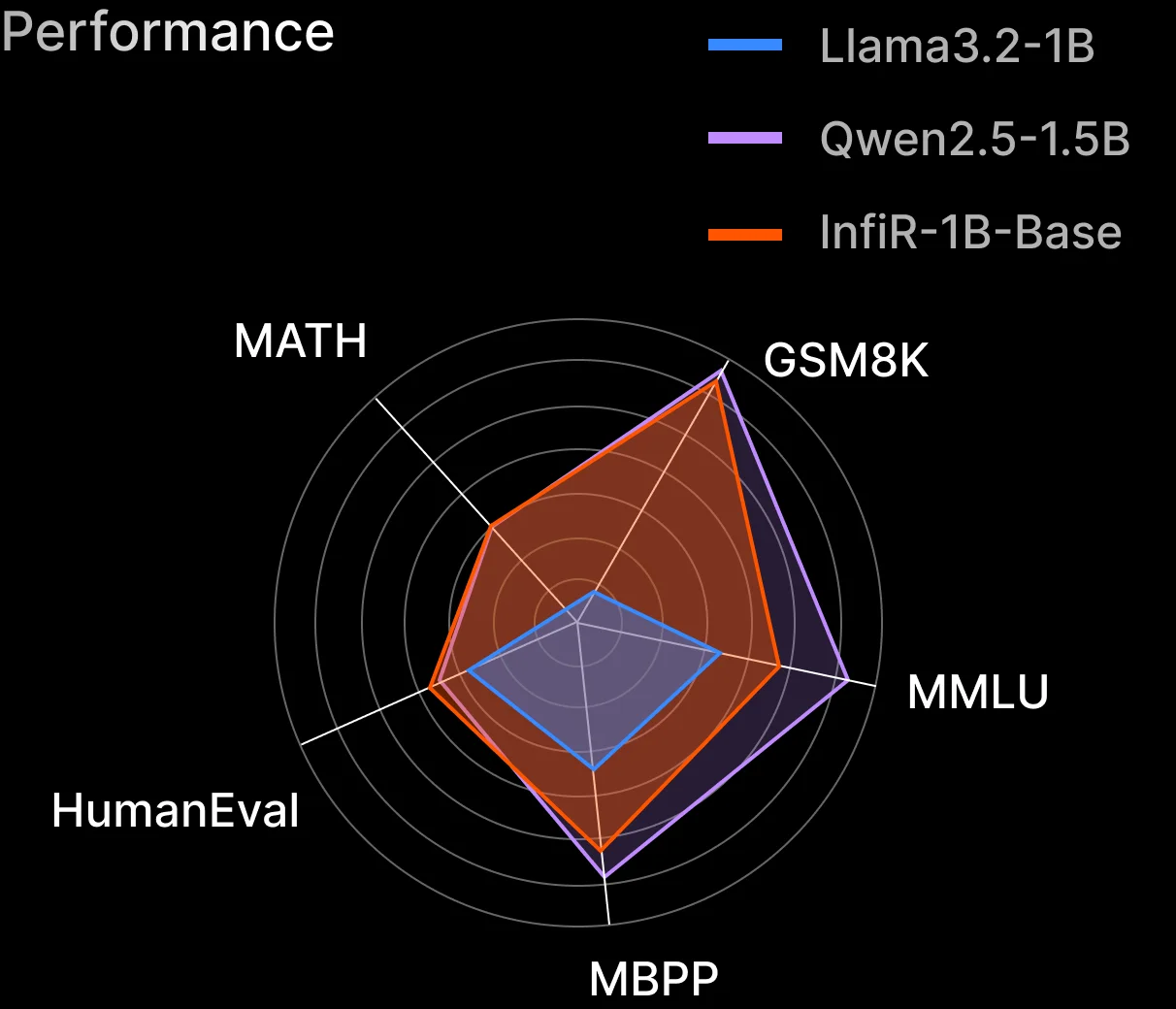
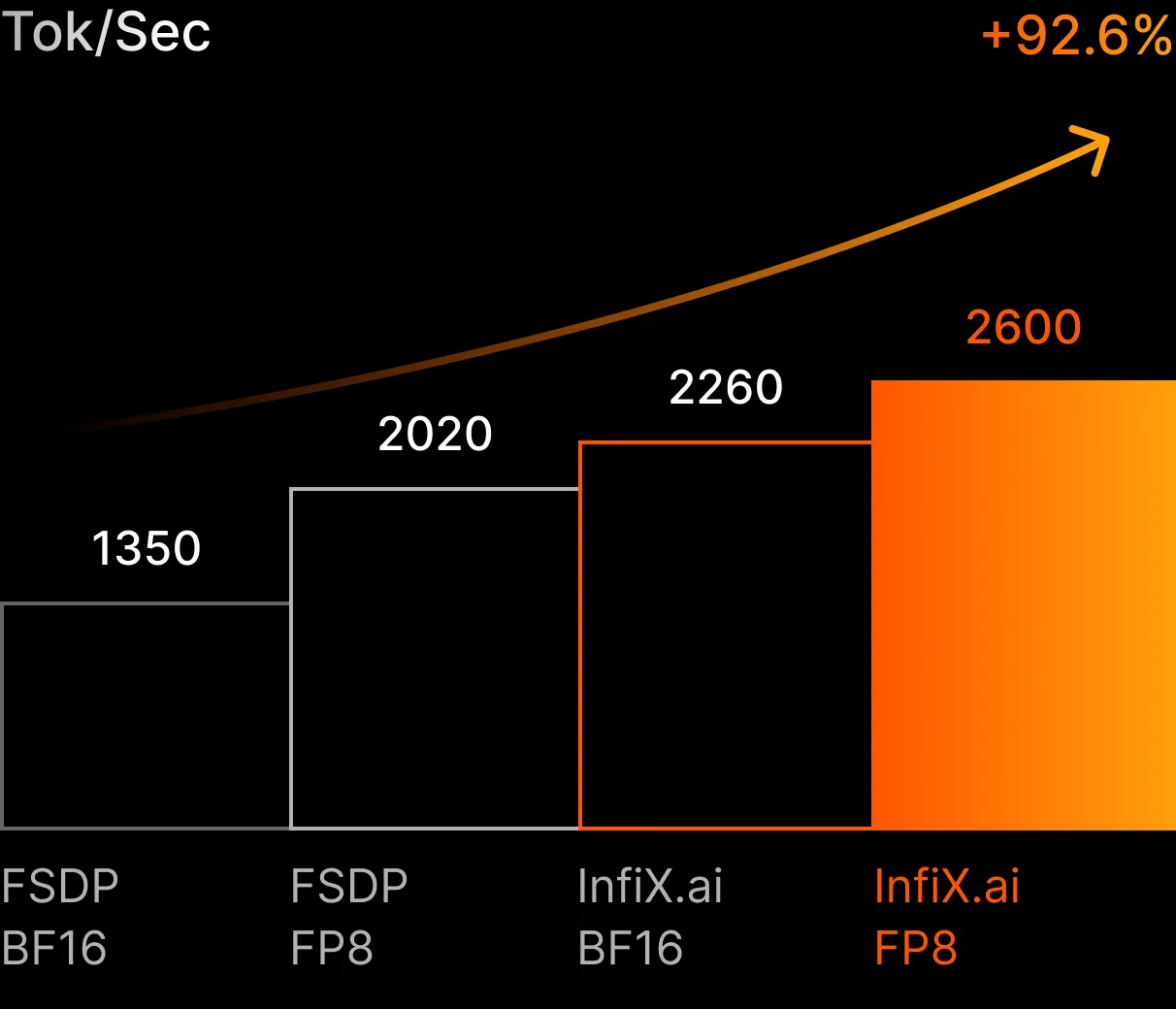
在保持接近 BF16 精度的同时,相比传统 FSDP 实现训练时间降低 48.1%、训练速度提升 92.6%,并有效降低内存压力与推理成本。
推理增强型低精度训练 1
推理增强型低精度训练 2
推理增强型低精度训练 3

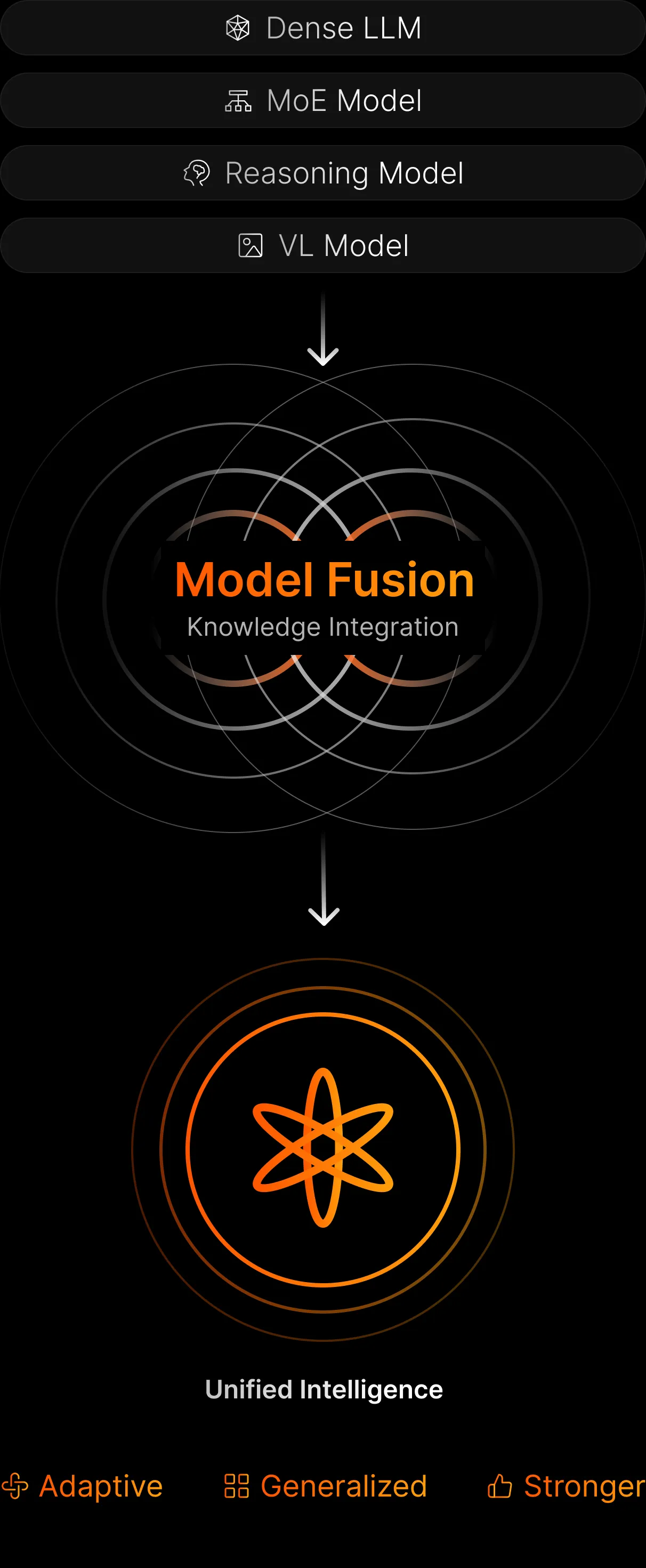
模型融合与模型合并

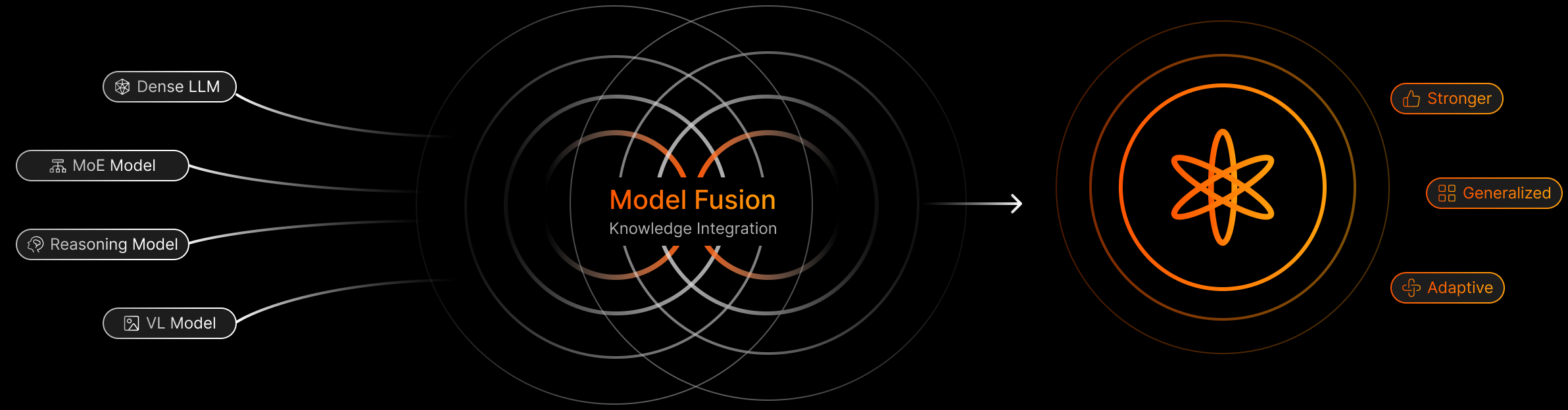
将多个模型的优势融合为更强的专家级 AI,同时无需承担多模型推理的额外开销。支持跨多领域的百亿参数级基础模型融合,所需 GPU 算力仅为完整预训练的万分之一。
模型融合与模型合并 1

最新研究

NeurIPS 20262026年5月13日

Geometry Conflict: Explaining and Controlling Forgetting in LLM Continual Post-Training

Continual post-training aims to extend large language models (LLMs) with new knowledge, skills, and behaviors, yet it remains unclear when sequential updates enable capability transfer and when they cause catastrophic forgetting. Existing methods mitigate forgetting through sequential fine-tuning, replay, regularization, or model merging, but offer limited criteria for determining when incorporating new updates is beneficial or harmful. In this work, we study LLM continual post-training through three questions: *What drives forgetting? When do sequentially acquired capabilities transfer or interfere? How can compatibility be used to control update integration?* We address these questions through *task geometry*: we represent each post-training task by its parameter update and study the covariance geometry induced by the update. Our central finding is that: **forgetting can be considered as a state-relative update-integration failure, it arises when the covariance geometries induced by tasks misalign with the geometry of the evolving model state**. Sequential updates transfer when they remain compatible with the model state shaped by previous updates, and interfere when state-relative geometry conflict becomes high. Motivated by this finding, we propose **G**eometry-**C**onflict **W**asserstein **M**erging (GCWM), a data-free update-integration method that constructs a shared Wasserstein metric via Gaussian Wasserstein barycenters and uses geometry conflict to gate geometry-aware correction. Across Qwen3 0.6B--14B on domain-continual and capability-continual settings, GCWM consistently outperforms data-free baselines, improving retention and final performance without replay data. These results identify geometry conflict as both an explanatory signal for forgetting and a practical control signal for LLM continual post-training.

NeurIPS 20262026年5月13日

NPCBench: A Clinical Apprenticeship Benchmark for Guideline-Constrained Care-Pathway Reasoning in Nasopharyngeal Carcinoma

Current medical LLM benchmarks typically decompose clinical competence into isolated factual questions, single-image interpretation, or brief case scenarios. This fragmented paradigm primarily measures local correctness but provides limited insight into whether models can progressively integrate subspecialty knowledge, multimodal evidence, and evolving patient states into safe, guideline-constrained longitudinal reasoning. To address this gap, we introduce NPCBench, a multimodal clinical apprenticeship benchmark for nasopharyngeal carcinoma (NPC). NPCBench operationalizes specialist training as a staged evaluation of (M)LLMs across guideline recall, atomic rule application, multimodal evidence grounding, longitudinal care planning, state revision, and expert-style consultation. It comprises 4,077 staged evaluation problems and 25 multimodal full-care path episodes, covering pathology diagnosis, MRI staging, and 146 downstream clinical decisions. The benchmark explicitly links stepwise tasks to complete patient-level care trajectories, enabling systematic evaluation of all clinical pathways. Beyond isolated precision, NPCBench evaluates whether the models ground decisions in multimodal evidence, maintain temporally consistent patient states, and provide safe expert-level consultation across complete care trajectories. Across 30 evaluated models, we observe a persistent composition gap: strong performance in local case-level tasks does not translate into episode-level clinical competence required for end-to-end patient management. Overall, NPCBench advances medical AI evaluation from static question answering toward apprenticeship-style workflow evaluation, providing a rigorous testbed for evidence-grounded and temporally coherent reasoning in complex oncology care.

InfiXspeed

借助 FP8 驱动的 InfiXspeed,
构建你自己的专家级 AI。

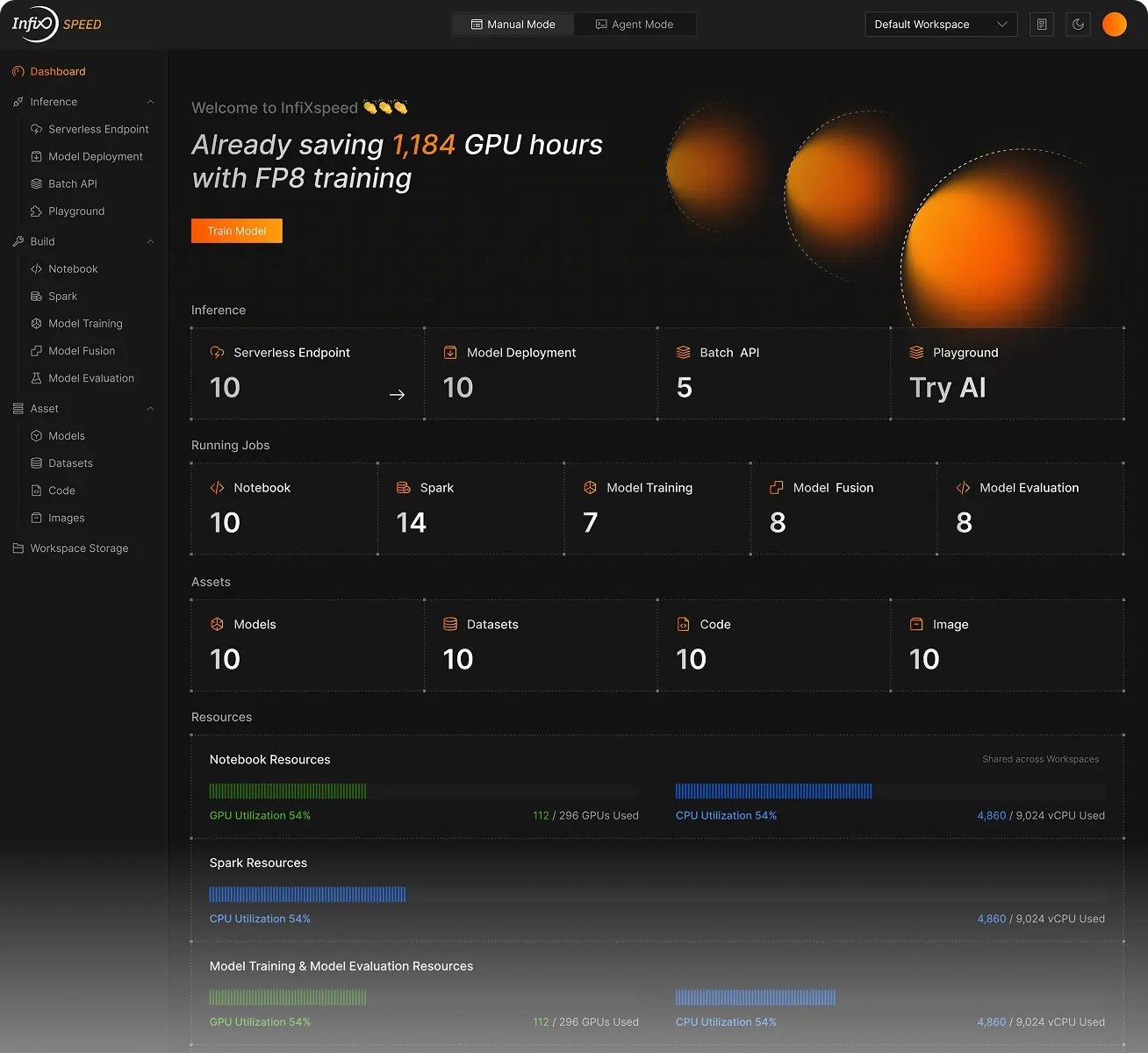
InfiXspeed是InfiX.ai推出的企业级领域AI开发平台,帮助企业将私有数据、业务流程与行业知识快速沉淀为特定领域的专家级 AI,在安全可控的环境中实现模型训练、效果评测与应用部署,加速AI从概念验证走向业务落地。

了解更多
InfiXspeed dashboard preview

认识 InfiX.ai